Meet the Planner Before You Price the Job: A Pre-App Habit That Pays
Most small builders have been here: a client waves a sketch over the bonnet of your van, asks for a price for a rear extension, and wants it by Friday. You can price the drawing in front of you. The trouble is that the drawing may not be the scheme the local planning authority will actually accept. That is where a pre-application meeting earns its keep. Not as a box-ticking exercise, but as a commercial step that protects your quote, your programme and your sanity.
What a pre-app actually buys you
Pre-application advice is a formal conversation with the local planning authority before a full application goes in. You pay a fee, submit a bit of information and sit down with a planning officer. What you get back is not a guarantee of approval. It is an early signal on the things that tend to sink small schemes: scale, siting, design, access, overlooking, drainage, trees, conservation area impact or whether permitted development rights have already been eaten up.
For a builder, the value is not the letter at the end. It is the chance to find out now, rather than after you have priced the job, that the first-floor rear window needs moving, the roof pitch is wrong for the street scene or the access cannot work without a revised driveway layout. Those are not design details. They are money, time and credibility.
When the fee is worth it, and when it is not
A pre-app is rarely worth it for a straightforward job that clearly sits within permitted development and has no obvious constraints. If you are replacing a conservatory roof or putting up a small outbuilding well away from boundaries, a lawful development certificate or a quiet word with the planning department may be enough.
It becomes far more valuable when the scheme is borderline. Extensions in conservation areas, conversions of agricultural buildings, flats above shops, infill plots, schemes near listed buildings, or anything where the client has already had a refusal on a previous version all deserve early advice. The same goes for projects where the client is stretching their budget. A refusal is expensive enough. A refusal after you have ordered materials or started enabling works is a different league of pain.
Bring paperwork that earns its keep
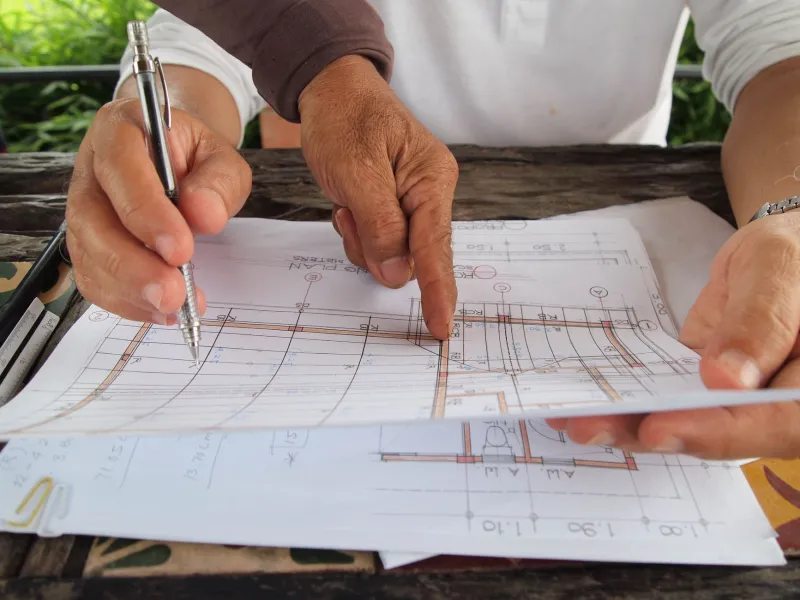
Planning officers are busy. A vague meeting gets a vague answer. Turn up with a proper pack: a location plan, existing and proposed floor plans, elevations, a site layout, and a short note on what the client is trying to achieve. Photographs of the site and surrounding street scene are useful, especially for extensions and conversions. If there are trees, drains, rights of access or a party wall involved, say so early.
You do not need a fully worked-up planning submission for a pre-app. But you do need enough for the officer to understand the scheme and the site. A hand-drawn sketch with no dimensions and a postcode is not a shortcut. It is a delay waiting to happen.
Questions that get useful answers
Do not ask: will this get approved? No planning officer will give you a blank cheque on that, and the answer will not help you price the job. Ask instead: which policies are likely to carry the most weight here? What are the main issues with this layout? If the scheme were to change, what would make the biggest difference? Are there any highways, drainage or design concerns I should factor into the programme?
It also pays to ask about validation requirements and likely consultee responses. A scheme that needs a flood risk assessment, a heritage statement or highway input is a different job from one that does not. Those requirements affect both the quote and the timeline.
Turning feedback into a buildable, priceable scheme
When you leave the meeting, do not file the notes and carry on. Take the officer’s feedback back to the drawing board and test it against buildability. A planning officer may suggest a lower ridge, a different window arrangement or a stepped footprint. Those changes can be sensible in planning terms and awkward on site. Your job is to flag that early, before the client falls in love with a scheme that is hard to build and harder to price.
This is where the pre-app starts paying for itself. You can price the revised scheme with fewer assumptions. You can programme it with fewer unknowns. You can tell the client what the planning risk actually is, rather than hiding behind a caveat that says ‘subject to planning’. That makes you look like a builder who has done this before, because you have.
Programme and quote discipline
Build in time for the pre-app and the subsequent application. A two-hour meeting is cheap compared with a redesign that lands after you have sent a fixed price. Use the feedback to sharpen your quote: note the design changes, the likely conditions and any surveys that may be needed. If the scheme is still uncertain, price the known work and list the provisional items clearly. Do not bury planning risk in a lump sum and hope for the best.
A pre-app will not remove every refusal risk. It will not stop a client changing their mind or a neighbour objecting. But it gives you a better scheme, a more honest quote and a programme with fewer nasty surprises. For a small builder, that is usually a couple of hours well spent.
A short checklist before you call
- Confirm the local authority’s pre-app fee and what they need at submission.
- Prepare a location plan, existing and proposed drawings, site photos and a brief written summary.
- List the constraints: conservation area, listed buildings, trees, access, drainage, flood risk.
- Take a short list of questions that affect design, cost and programme.
- Write up the advice the same day and send it to the client with your next steps.
Do that consistently and the pre-app stops being an optional extra. It becomes part of how you win work without buying yourself a redesign.