Soggy Site, Solid Claim: Proving Weather Delay Without the Argument
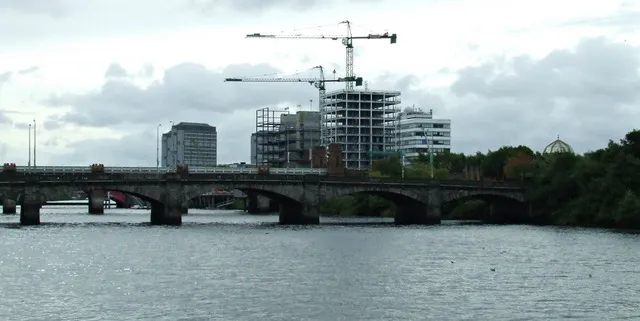
Photo: Thomas Nugent , CC BY-SA 2.0, via Wikimedia Commons
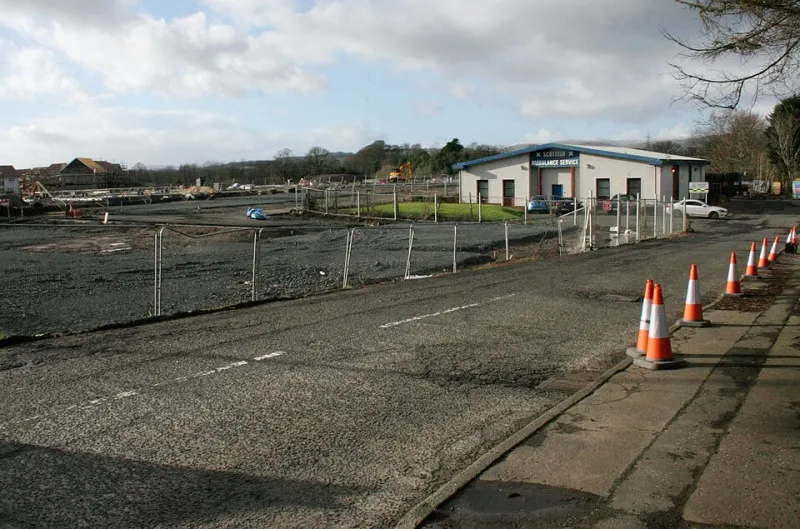
You know the week. Three inches of rain between Monday and Thursday, the access road turned into something you'd need a boat to cross, and a pump running round the clock to keep a trench from becoming a pond. Meanwhile the programme is quietly bleeding and the client is asking whether the roof will still be watertight by Christmas.
Sympathy doesn't pay prelims. Neither does a shrug and a line in the final account saying "weather". If you want the time back — and the money that comes with it — you need a case that stands up when someone who wasn't there reads it six months later.
First, the uncomfortable truth about normal rain
Every UK contractor loses days to weather. Your contract knows that, and so does your price. Rain in November is not an event; it's a season. What the contract actually cares about is weather that is exceptional compared with what your area normally gets at that time of year.
That's the bar, and it's a comparative one. It's not "it was horrible out there". It's "this week was worse than the record for this location, in this month, and here's the evidence."
Get your head round that early, because it shapes everything you record.
What the standard forms actually say
Across the common UK forms, weather delay is a recognised ground for an extension of time — but each one frames it differently, and the difference matters.
- JCT treats "exceptionally adverse weather conditions" as a Relevant Event. The judgement is essentially about severity and foreseeability at the time the contract was signed.
- NEC4 is blunter and, in some ways, kinder: a compensation event arises where weather conditions at or near the site are exceptional having regard to the weather data published by the Met Office for the geographical area. No argument about what's normal — the record decides.
- Bespoke and amended forms vary wildly, and some quietly carve weather out altogether. Read your particular amendments before you assume anything.
If you're on NEC, the Met Office reference isn't just helpful colour. It's the test. Which means the data should already be in your job folder, not something you go hunting for once the row has started.
The site diary is your witness statement
The single most useful thing you own in a weather claim is a diary that reads like it was written by someone who expected to be challenged. Most aren't. Most say "rained all day", which proves nothing except that it was wet.
Better entries answer a few specific questions, every day:
- What time did work stop, at which location, and on whose instruction?
- Which operatives were affected, by name and trade, and how many hours did they lose?
- What did you try instead? Resequencing, moving inside, temporary drainage, extra stone on the haul road?
- What couldn't happen — deliveries turned away, concrete cancelled, a crane lift abandoned?
- Ground and access conditions, in plain description rather than a mood.
Write the entry the same day. A diary reconstructed on Friday afternoon for a week nobody can quite remember is worth roughly nothing, and the other side will say so.
A second pair of eyes helps too. If your site manager is flat out, get the foreman or a supervisor to countersign the day's entry. Two signatures looks like a record; one looks like a claim being built after the fact.
Photographs that actually prove something
Photos are persuasive, but only if they're consistent and identifiable.
Fix a handful of viewpoints at the start of the job — the site entrance, the haul road, the lowest point of the excavation — and shoot them from the same spot each day. A rolling series showing the same puddle spreading is far stronger than twenty artistic shots of mud.
Include something for scale. A boot, a kerb, a length of timber. "Water up to the second rung of the ladder" is a fact; a grey photo with no reference point is decoration.
And mind how the files travel. Photos sent through messaging apps often lose their metadata, which is half your proof. Email the originals, or better, dump them straight into a dated project folder with the location and time intact.
Get the weather records before you need them
The Met Office publishes historic station data and gridded datasets free of charge, and the National Climate Information Centre produces monthly summaries. Find your nearest recording station now, bookmark it, and note its name and distance from site in the job file.
When a delay hits, pull:
- Daily rainfall and, where relevant, wind speed or temperature for the delay period from that station.
- The same period for the past ten to fifteen years, to show what "normal" looks like.
- Any regional or national summary that flags the event as notable — a named storm, a Met Office warning, a record monthly total.
Three lines of comparison will do more for you than two pages of narrative. "Site received 68mm in four days; the ten-year median for the month at [station] is 71mm, and the site flooded because the preceding week was already saturated" is the kind of sentence that closes conversations rather than opening them.
Notice: the deadline nobody forgives you for missing
This is where good claims die. Time bars are unforgiving and "we didn't realise how bad it was going to get" is not a defence anyone accepts twice.
Under JCT forms, notice of a delay is typically required within a handful of working days of you becoming aware of it — often around five. Under NEC4, you have eight weeks from becoming aware of a compensation event to notify it. Different numbers, same principle: early, written, specific.
Your notice doesn't need the full financial picture. It needs to say what happened, when you became aware, which clause you're relying on, roughly how much time you expect to lose, and that you'll update with particulars. Then update. Silence after a notice looks like abandonment.
Put a reminder in your calendar for day two and day four of any weather stoppage. Not because you'll forget the rain, but because you'll be busy dealing with it.
Talking money before it becomes a fight
Here's the part most contractors get wrong: they claim the time at the time, then spring the cost at the final account, eighteen months later, to a client who has long since filed the whole thing under "sorted".
Bring them in early. A short, factual email — days lost, activities affected, what you're doing to claw it back, and the likely cost of prolongation if the delay isn't recovered — is a much better conversation than a variation order landing out of nowhere.
Have your build-up ready: extended preliminaries, standing plant, site staff, welfare and security for the extra weeks, plus any acceleration costs if the client wants the date held. Show your workings. Round numbers with nothing behind them invite negotiation; itemised ones invite payment.
And if the numbers look contentious, offer a without-prejudice conversation early. A protected chat in week two is cheap. A solicitor's letter in month nine is not.
When they push back
You'll hear the same three lines. Have an answer ready.
"You should have allowed for it." You did — for normal weather. That's what the comparison data is for.
"You were already behind." Fair challenge, so be honest about your own float and critical path. A weather claim gets you the time the weather actually cost you, not a reset of your own slippage. Conceding the bit you own makes the rest far more credible.
"You didn't mitigate." Show what you did — resequencing, temporary drainage, weekend shifts, moving trades under cover. Records of effort matter as much as records of rain.
Keep it boring and you'll win it
Weather claims aren't won with drama. They're won with a dull, consistent, dated pile of evidence assembled by someone who assumed it would be needed. Diary, photos, station data, notice, cost build-up — five things, done properly, on the day.
Do that and a washout week stays a washout week. Skip it and it becomes a fortnight of argument you'll be paying for in more ways than one.